If your firm has a law website, having a way to instantly communicate with visitors can increase your firm’s intake of new clients.
Live chat software is a smart solution when it comes to your online marketing and advertising efforts. When a visitor engages with your live chat, you can quickly and immediately address their questions or schedule a consultation.
Before going on about the benefits live chat provides a law firm’s website, there are ethical issues to consider. While you may be eager to use clever marketing techniques to convert visitors into your next client, the American Bar Association has outlined some ethical rules for lawyer’s websites.
With an understanding of what you can and cannot do, the following five points will review the top benefits of using live chat.
Easy to Get Started
Worried that installing live chat on your law firm’s website will require technical knowledge?
Many live chat services can get their software running on your website in just a few clicks. Whether you have computer knowledge or not, once live chat is installed on your website, the next thing to do is to get ready for visitors to your website.
When a visitor arrives at your website, they will receive a notification that you (or qualified staff) is standing by to offer assistance. If the visitor engages with the live chat messenger, you will be immediately notified and a live chat session can begin.
All live chat services offer varying packages and features. Some can provide pre-scripted bots which allow you to direct visitors using prompted questions, toward providing their contact information.
Establish Trust and a Good First Impression
In a lawyer’s line of work, you know that most people do not enjoy the legal process. When it comes to finding a lawyer for their situation, people want to alleviate their problems and quickly as possible.
Live chat allows you to set a good impression the moment a prospective client lands on your website. You can quickly engage in a conversation and build trust by addressing their needs. You can respond to visitors specific needs and prepare them for intake.
Law firms are constantly searching for new ways to differentiate themselves from their competition. With live chat, law firms can provide a 24/7 reception and continue to collect leads for prospective clients after hours.
In certain situations that require legal services, prospective clients are often enduring emotional situations and want immediate assistance. Those recovering from a personal injury, going through a divorce, or on the brink of bankruptcy are looking for a solution as soon as possible.
Imagine being frustrated, sad, or extraordinarily angry, if you can’t find what you’re looking for on a website within a few seconds, you’ll likely go to another lawyer’s website with the solution.
Having live chat on your website is a sure way to address the immediacy and urgency of your prospective client’s situation.
Reduce Intake Time
In case you find yourself preoccupied with client’s cases and your staff is busy with administrative tasks, you can still use live chat to continue intaking.
Some live chat companies offer a unique service allowing you to have 24/7 live chat on a per-lead-basis. This means that whenever a visitor comes to your website, uses the live chat, and provide their contact information (i.e. e-mail, phone number, etc.), you pay the live chat company.
This is both time efficient and cost-effective as you won’t have to hire another receptionist or staff to handle inquiries at odd hours. Often, people are too preoccupied during typical work hours to contact your office. Live chat allows you to collect leads even after you have closed the office.
This is likely to be the most valued part of any live chat software. When you have a successful website with traffic coming in, converting them into clients is the next thing to do.
All that money you invested in web design, hosting and creative advertisements would be for nothing if visitors weren’t becoming your client. Live chat has a proven ability to increase conversion rates on websites.
Obtaining answers to problems is a high priority for people browsing online. Instead of wasting time search through help forums, FAQs, or irrelevant articles, live chat solves problems quickly.
In addition, live chat providers offer fair pricing and may even go so far as to guarantee an increase in conversions or your money back. Having this kind of promise allows your website to focus on what matters most: finding new clients.
Let’s consider this for a moment: lawyers being replaced by robots.
It sounds like a farfetched, sci-fi movie featuring advanced robotics bringing clients to court with analytical judges determining the fate of humanity.
However, as crazy as it may sound, will lawyers become obsolete with the growing trends in technology and communication?
Since the dawn of industrialization, there have been numerous revolutions in robotics technology that has freed up labors for the blue collar workers. From the view of human progress, this is the step in the right direction. However, as more and more people are losing jobs to robots, how will this affect the legal world?
Advancements in technology allows for information to be stored and retrieved in an easily accessible and systematized way. If artificial intelligence can be designed to extract evidence useful for litigations, to collect details for contracts, and trigger red flags whenever companies are committing fraud or other illegal activities, would this eliminate the number of lawyers needed in the world?
Automatization of Legal Work
Automatization is an ongoing development that allows for time efficiency and saving significant amounts of money. From a client’s point of view, if utilizing an online database, or “e-lawyer” to get accurate results, fast.
The early beginnings of technology designed to make a lawyer’s life easier started with chatbots. Technology from Ross and Lex Machina provide a chat lot system that makes setting up consultations simple for clients to do.
Another rising robot is called DoNotPay which was developed by Joshua Browder. This is a free parking ticket fighting chatbot that asks you a series of questions about your case. Questions like, “Were you illegally parked because of a medical emergency?” or “Were road signs clearly marked?”
At the end of the chat, the bot prepares a letter that can be used to fight parking tickets. So far, this system has been used to help hundreds of thousands of people to win parking ticket violations in Seattle, New York, and London.
Currently, there are companies racing to innovate this area of law by creating efficient online services that can provide these documents in a single click.
Take for example LawGeex. They have developed an AI system that allows for the automation and approval of contracts. There focus is to eliminate paper work altogether.
These chatbots could be the beginning of a complete legal revolution. There could be dramatic changes to the way bankruptcy, divorce disputes, and deportation can be dealt with. Instead of using a lawyer to dispute the finer points of law, AI systems can be developed to analyze every possible situation and find the exceptions, loopholes and historical cases needed to win a case.
Essentially, an AI will have access to a whole database of legal language and the history of legal cases to make decisions. From this perspective, the argument of human error leading to mistakes in law can certainly be avoided.
Here’s a couple more examples of law being replaced with technological solutions.
Judicata which is developing a database that was just mentioned above. While it may not be a go to tool for people experiencing a legal issue, it’s an AI program that provides lawyers with a chance to extract the information they need to build a case or contract.
Another AI based law solution comes from FairDoc. FairDoc focused on creating a virtualized legal team allowing for intake of clients to be made online and even tracking your client activity. It’s another cost effective solution to reduce the amount of work that is typically demanded by lawyers.
How Can You Fight The Rise of Robots?
There’s no avoiding the rapid growth that technology has in the world. As the old saying goes, if you can’t beat ‘em, join ‘em.
Question what may be “replacing” you. Be skeptical. Not all technology may be the best for you, your law firm, or your clients.
Accept changes. You can stick to traditional law practice, and perhaps you’ll be just fine, however finding a few new pieces of software that makes your law practice easier and more efficient may be in your best interest.
Preserve your practice. Let’s face it, some parts of technology can be good, but outsourcing significant parts of your business with 3rd parties can become a liability. Your clients trust you. Therefore you have to make decisions as to whether the products and “robots” used in your practice can be trusted for the long term.
Conclusion
Likely there won’t be a terminator situation rising anytime soon for lawyers, however being up-to-date will help you stay ahead. One of the best things to is to embrace the coming changes but doing so with a hint of skepticism. To really succeed, bringing your law practice online may be the cutting edge you need to stay alive. Imagine having your own blog, you could be the leader in the transition from human based lawyers to AI law machines.
The focus of a website is to receive the most clicks that provide a steady stream of traffic and leads to an increase in business and clients. The means that every business (and law firm) is fighting for the front page of Google.
Visitors arrive to your website in a variety of way. One way to receive free, organic traffic is by ranking high on search engines via keywords. The content you provide and the keywords included on your pages will be selected by search engines that best match the query.
An alternative to free, organic traffic is PPC (Pay Per Click).
Successful campaigns use a landing page that has a distinct message and a clear call-to-action. This means that whenever you advertisement is clicked, that person will be landing on a webpage describing a solution to their problem (i.e. call 123-456-7890 for a FREE CONSULTATION).
PPC campaigns can be set up in a variety of ways with specific ad groups targeting the following:
Search engines like Google, Yahoo, Yandex, and Bing allow you to design text based ads that will appear when those keywords are entered into the search bar. The concept behind PPC is that you will only pay whenever someone clicks on your ad leading to your website or landing page.
No more text ads in the right sidebar of search results on desktop
Up to 4 text ads will be shown above the organic listings for “highly commercial queries” (before, up to 3 were displayed)
Up to 3 text ads will show at the bottom of the search results.
The maximum number of ads to be displayed will be 7 (before, there were up to 11)
Google defines “highly commercial queries” as the keywords that are in high demand in certain industries.
What Does This Mean for Lawyer’s PPC?
When you are choosing the right keywords to setup a PPC campaign, there may be a highly sought after keyword that drives up the prices. Let’s saw for example, “New York Lawyers” is a highly searched keyword. Due to popular demand, you can see yourself paying tens to hundreds of dollars per click.
Consider this. “Lawyer” and “Attorney” are the most expensive keywords used on Bing. They cost over $100 per click when used with search queries like these: “personal injury lawyer” or “accident attorney colorado.” Your monthly PPC campaigns could cost in the thousands with a return of investment being entirely uncertain. Bing is known to be the cheaper advertising platform and Google is likely to be much higher.
With the changes made by Google, this puts increasing competition on keywords but also to a top ranking position in the search queries. Where before prices may have varied from a dollar up, the supply and demand can push your PPC campaign budget beyond its limits.
The Downside Of PPC Campaigns For Lawyers
PPC offers a paid alternative to getting your website noticed by potential clients. However, these campaigns are based entirely on bids and competition for keywords. If there are a lot of advertisers bidding on the same keyword, the price goes up.
Unfortunately, PPC advertising does not guarantee that every click will lead to your next client. In fact, you could be losing a significant amount of money at each click when no one is contacting you for your legal services.
This document from Google detailing factors that influence your PPC viewability, claims that 56.1% impressions are not actually seen. This implies a considerable amount of loss and uncertainty when relying on PPC to find new clients and grow your firm.
Now, here’s something that you have to be aware of. Since you are not the only one competing for “high commercial queries” there are occasions of click fraud.
Click fraud is an extremely shameful marketing practice where one of your competitors will continually click on your ads until your budget is depleted. While Google does provide protection from fruad, there are still ways to get around this.
What Can Lawyers Do?
Paying $100 per click may not be a viable solution for small law firms.
As an alternative to pay per click advertising, lawyers can start their own blog and generate organic traffic to their websites. Although this too requires a significant amount of keyword research, time writing articles, and consistency with posting, the investment are for those seeking long term returns.
Having a blog can bring a flow to steady clients without having to spend thousands on advertising. By utilizing your knowledge and expertise in your field, you can provide solutions clients are searching for and direct them to a direct method of getting in contact with your legal services.
When combined with social media and other marketing strategies, blogging can be a relief to highly competitive and sometimes fraudulent ways of PPC campaigns.
In order to run a successful law practice, you’re going to need a website. Your website is the place for potential clients to discover your legal services, get to know you, and schedule a consultation.
However, before you or hired help creates your website, you’ll want to pick the best domain name for your law firm.
A website and a domain name are not the same, although they are closely connected. The website contains all your content, information, and images. Whereas the domain name is the address that people type in their browsers that bring them to your website.
There are many types of domain names available and there’s a few important guidelines to follow when choosing the best one for your law firm:
Top Level Domain for Lawyers
Top Level Domains (TLDs) are the little part of the domain name found after the DOT. These include, .COM, .ORG, .NET, and .GOV. There is even a specially created TLD for lawyers called .LAW.
The kind of TLD you decide will play a role in your ability to being found online. The universal TLDs are those listed above. There are also country specific TLDs such as .CA (Canada), .CN (China), .EU (European Union). Using these domains are restricted to those residing in that country and may not have as large a global reach as a .COM.
Most domains can be registered by anyone, however, the .LAW specific TLD requires proof of license before it can be issued.
Consider your domain name as a very important keyword that aides in your website getting found. People looking for a lawyer may search the following in Google: Florida Divorce Lawyers.
Those words, are considered keywords and they play an important part in how your website is found online.
One thing to keep in mind is that keyword stuffing your domain name could lead to penalties by search engines and prevent your site from ever being noticed.
For example,
“childcustodydivorcelawyers.com”
While a name like this appears to be congruent with your services, there are a variety of reasons to not use this kind of name.
Best Domain Names For Lawyers
Creating a domain name that is memorable and brandable is the best approach to take. This is important. Your domain name will serve as a banner that not only catches people’s attention but prepares people for what they’ll find on your website.
So, consider the following: what is the overall message you’re trying to say? Can people remember it easily? Can they type it into their browser without difficulty? Are there other websites with domain names similar to yours?
In addition, here are a few points to help you pick the best domain:
Keep it short and simple (KISS). Shorter names are easier to remember and simpler to type into the browser. Just imagine, if your name was Bernie, you could have this: bernietheattorney.com!
Be consistent. Your domain name should be a reflection of the services being offered and/or the location you provide them. Having a name like nyccourtconsultations.com (implying that you offer court consultations in NYC) would be more powerful than worldoflaw.com (potentially implying this site is about a world of flaws?).
Don’t use unpopular TLDs. There are many different domain names available that may seem ideal for branding purposes but have less effect as a common TLD like .COM. Many people are familiar with .COM as a domain name.
Avoid using hyphens. Search engines sometimes consider websites using hyphens as spammy and trying to stuff too many keywords. For example, best-lawyers-in-san-francisco.com may signal to search engines that this website is spam. While hyphens can be used without receiving penalties.
Lawyers Starting A Blog
Having a website allows your to showcase your practice, services, past clients, and contact information to the entire world. As well, another useful thing to do on your website is starting a blog.
As mentioned before, keywords play an important part in getting your site noticed online. While the domain name plays a significant roles in directing people to the website, the content is the most valuable.
The best way to make your website stand out online is by providing expert advice and quality content. Blogs allow you to build your reputation online as well as discover new, potential clients.
Domain Name Overview:
Do
Don’t
● Do use your personal or business name(s). Remember to keep it short and simple. Use a domain name like, smithlawassociates.com, instead of smithandtullylawassociates.com
● Do use your area of practice. If you’re a divorce lawyer, legal advisor, or criminal lawyer, feature that (i.e. smithdivorcelawyers.com)
● Do use something memorable. Especially for blogs, having a domain like, fortheloveoflaw.com or leagueoflawyers.com could serve as a great platform to express your legal work as well as for branding purposes.
● Do use a common TLD (such as .COM or even .LAW).
● Do consider the ethical code. Making claims that cannot be proven, or misleading (i.e. always-win-lawyers.com) may be a violation of your local jurisdiction’s ethical rules.
● Don’t use names that may change in the future (i.e. if an associate leaves your law firm)
● Don’t use abbreviations of your legal service that could create a negative reputation (i.e. Austin, Stevens, and Smith Lawyers Group: asslawyers.com)
● Don’t use spammy words like, best, top, greatest, etc. While you may feel that your law firm is #1 in your area, the search engines may flag your site as spam.
● Don’t make it too personal. Whatever you are interested in and passionate about should not be used for your domain name, unless, it is relevant to your area of law.
● Don’t use hard to remember or difficult to spell words.
● Don’t copy another domain name. If serveandprotect.com is taken, avoid taking serveandprotect.net (or any other TLD). This can confuse your potential clients.
Choosing the best domain name for your law practice is not going to be easy. Remember that search engines like Google do provide benefits when a keyword is matched in your domain name. And you need to register domains from a trusted global domain registration company. However, try to avoid coming off as spammy and use a name that is broad but to the point. For branding purposes, short and catchy would be the better approach.
Facebook has considerable potential for marketing and finding client referrals. With Facebook, you can build strong relationships between users and your legal services.
For your law firm, Facebook Ads allows you to put your law firm in front of people who may be in need of legal aid.
This article will take you through the steps of starting your first Facebook Ad campaign as well as a few strategies you can try.
Facebook Pages for Lawyers
If you haven’t done so already, you may want to consider creating a Facebook page for your law firm.
This is not a requirement to use Facebook Ads, however your Facebook Page can be used strategically to market your law firm.
Facebook pages allow you to create a community surrounding your legal services. Here you can showcase your latest law related blog posts and other promotional information to everyone who likes your page.
As well, you can use Facebook Ads to drive traffic and engagement to your page to boost your online presence and, reputation.
When you’re just getting started with Facebook pages, the best thing to do is grow your page organically to increase credibility and engagement before using Facebook Ads to achieve your goals.
For the remainder of this article, let’s focus on creating a Facebook Ad and how you can use it effectively for your law firm.
What Can Lawyers Do With Facebook Ads?
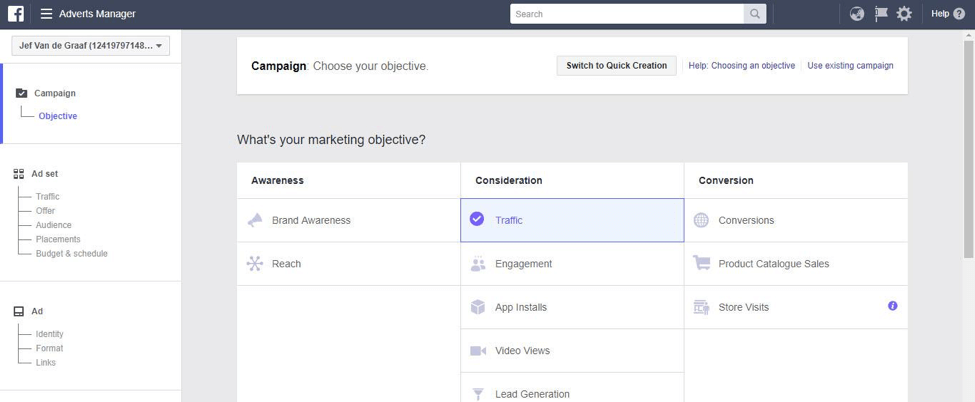
Facebook Ads is divided into 3 objectives:
Awareness. Use this objective to create interest in your law firm (i.e. online branding).
Consideration. Use this objective to get people thinking about your law firm and gain access to more information (i.e. articles, contact info, etc.).
Conversion. Use this objective to encourage people to contact your law firm to arrange a consultation or use your legal services.
The goal of your advertising campaign will be different depending on what you are trying to achieve.
If you’re looking to grow your online presence, creating awareness and consideration ads will be your best choices.
If you’re looking to get people to call your office and set up a consultation, creating conversion ads will help you achieve that.
Once you have determined the goal of your advertisement, it’s time to create your first Facebook ad.
Once you have set up your account, you’ll have access to the Ads Manager Dashboard. Here you can use Facebook’s Guided Creation to create your ad.
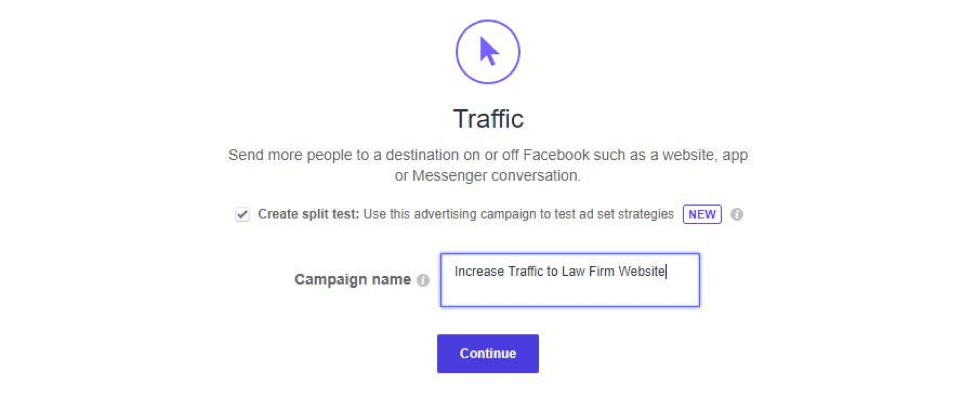
In this example, let’s look at how to set up a Facebook Ad to drive more traffic to your law firm’s website.
After selecting Traffic under the CONVERSION objective, scroll down to continue. You’ll notice an option to create a Split Test.
If you’re unfamiliar, a split test allows you to create two ads and test them to see which ad performs better.
With Split Testing, you can create different ads that target the same people, use the same ad to target different people, or experiment with different ad delivery methods.
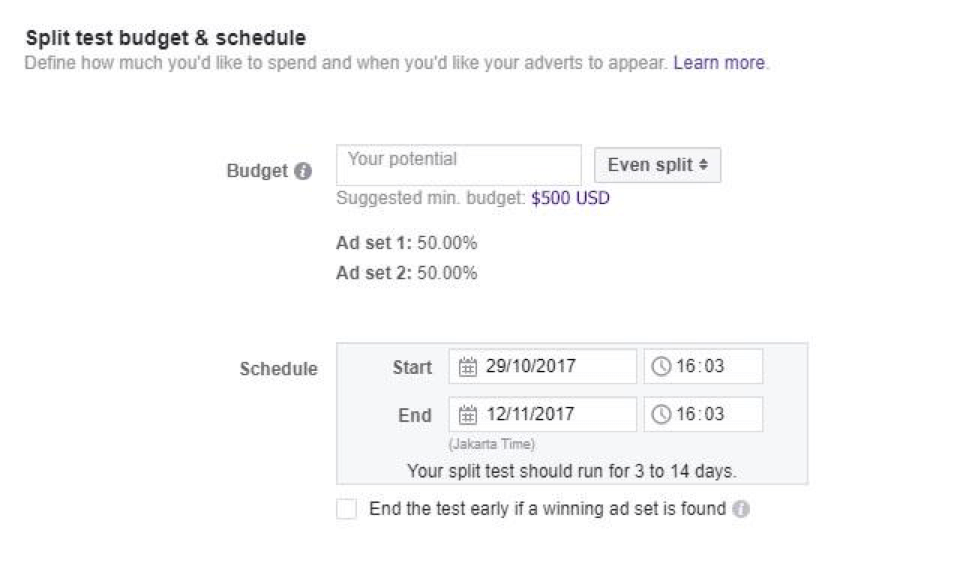
Facebook provides all the analytic tools to measure the results. Depending on how you setup your budget, you can choose to split your budget to run both ads equally or let Facebook decide which is the better ad and use more of your budget.
WHERE TO SEND TRAFFIC
You’re in complete control of your Facebook Ads. When you’re setting up your ad, you can choose to send people who click on your ad to your website, a Facebook Page, or even Facebook Messenger to start a conversation right away.
Not sure where to send people who click on your Facebook Ad?
Try a landing page. Landing pages are single pages online that can be designed like your Facebook Ad with more details about your law firm, how to get in touch, or other information you want to provide.
[thrive_leads id=’702′]
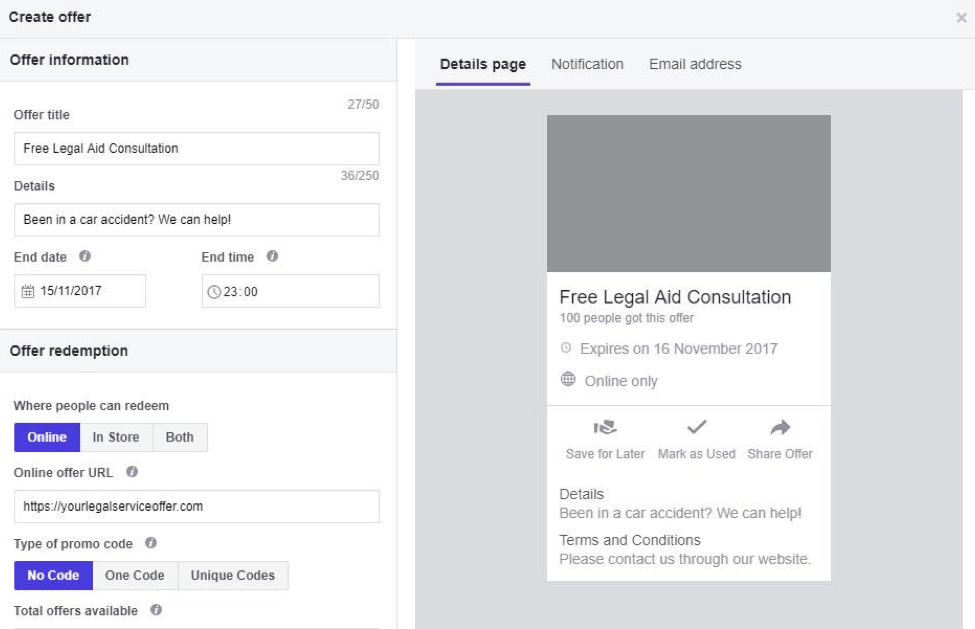
DO YOU HAVE AN OFFER?
Sometimes, it can be an effective strategy to provide an special offer in your Facebook Ads.
This can be a free 30 minute consultation, reduced rates for a specific legal service, or something else related to your law firm.
Offers can be limited in time (i.e. offer ends November 15th) or amount (i.e. available only to the first 15 people).
The benefit of setting up a Facebook Ad with an offer is that people who see this ad can save it and receive notifications about it.
VARIABLES FOR YOUR FACEBOOK AD SPLIT TESTING
As mentioned before, split testing lets you control different variables relating to how your Facebook Ads will be viewed online.
There are 4 options:
Creative. Allows you to use all variables, 2 to 4.
Delivery Optimization. Allows you to choose how your ads are delivered. You can focus on getting Link Clicks, Landing Page Views, Impressions, or Daily Unique Reach.
Audience. Allows you to define two set of audiences to serve your ads to. You can choose Location, Age, Gender, Languages. As well, you can select some detailed targeting depending on people’s demographics, interests, or behaviors. As an example, divorce lawyers may want to target people between 25 to 35 as this is a common age when couples experience divorce.
Placement. Allows you to choose where your Facebook ads will be placed. Facebook has a range of advertising access. You can feature your ads on Facebook, Instagram, and their partner network. As well, you can choose to have your ads featured in people’s newsfeeds, side column and more.
Consider placing an eye catching ad in a new feed to drive traffic to your legal services.
Notice: Most Facebook Ads are charged based on Impression. This means, each time Facebook serves your ad, you’ll be charged. If you’re looking for a different advertising method, try Google Adwords for Lawyers. With Google, you can set up a pay-per-click ad campaign.
BUDGET & SCHEDULE
Once you have determined how your ads will be delivered, who your target audience will be, and where your ads will show up, you can set your budget.
With split testing, you can start with an even split then select to end the test early if one of your ads performs better than the other. This way, you can gain the most results from your Facebook Ad.
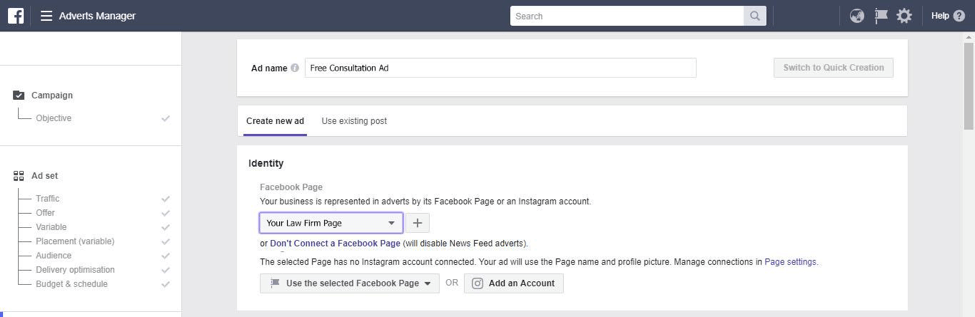
Start by naming your ad. Then, decide whether you will be connecting your Facebook Page to the ad or not. If you don’t have a Facebook page, be sure to click “Don’t Connect a Facebook Page.”
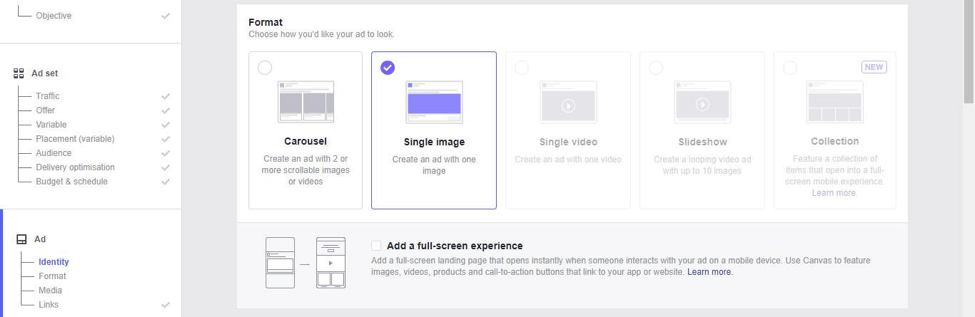
Next, choose the ad format you want to use.
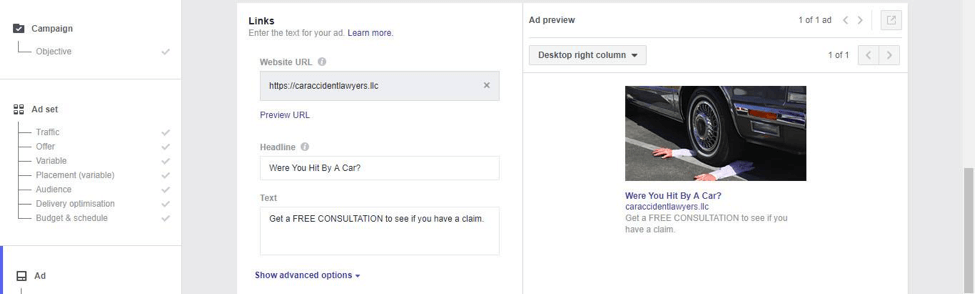
The next step allows you to add photos to your ad. Facebook offers some Free Stock Images or you can upload your own.
Design Smart Lawyer Ads
Figuring out Facebook Ads can itself be difficult. However, creating an effective ad can be equally challenging.
There is no one design that will send people to their phones and to contact your law firm. This is where Facebook’s split testing allows you to create variations in your ad designs to see what works, and what doesn’t.
Here’s some sample ads to give you ideas for creating your own Facebook Ads:
When you’re satisfied with your ad design and have set up a billing account, you can create your ad and test the results.
Should You Use Facebook Ads?
Marketing your law firm using Facebook Ads provides you an opportunity to find client referrals and expand your legal services.
Although Facebook is used predominantly for entertainment and staying connected with friends and family, it can be used to reach new people, build your online presence, and give access to legal services.
Facebook ads are just one way of marketing your law firm. You may also want to give Google Adwords a try.
Google’s pay-per-click (PPC) advertising system uses keyword phrases and displays your ads to those searching for your legal services.
Something to keep in mind, it takes time and money to see a measurable ROI with Google Adwords. You’ll see that considerable planning and research is involved.
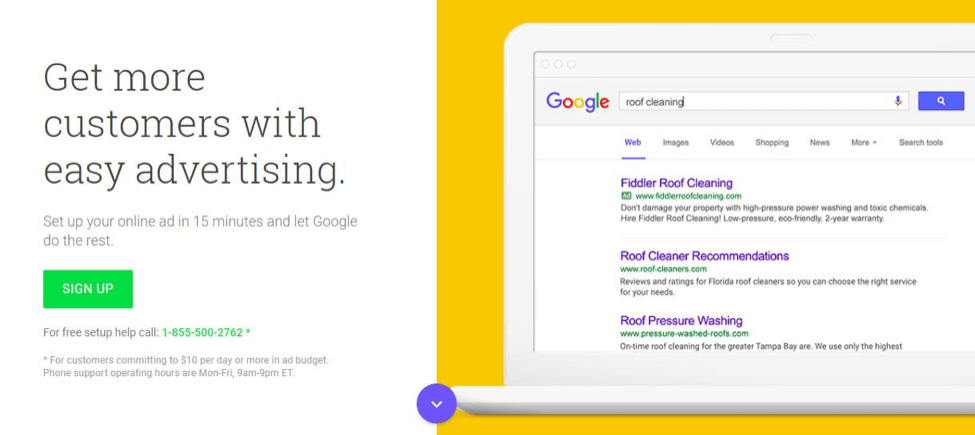
As an alternative, Google also offers Adwords Express which a simple solution to setting up advertisements without any worries.
Google Adwords has 4 kinds of ads you can use to attract clients to your law firm. Those are: Display Ads; Video Ads; Search Ads; and, App Ads.
Display Ads. Google has a network of websites where your ad will be featured. These are the banner ads you see at the top and side of websites.
Video Ads. If you’ve made a promotional video for your law firm, you can use video ads which can attract new clients from YouTube.
Search Ads. These are the ads found at the top and bottom of every Google search.
App Ads. You probably won’t use App Ads since they are focused on promoting an App.
[thrive_leads id=’702′]
Getting Started on Google Adwords
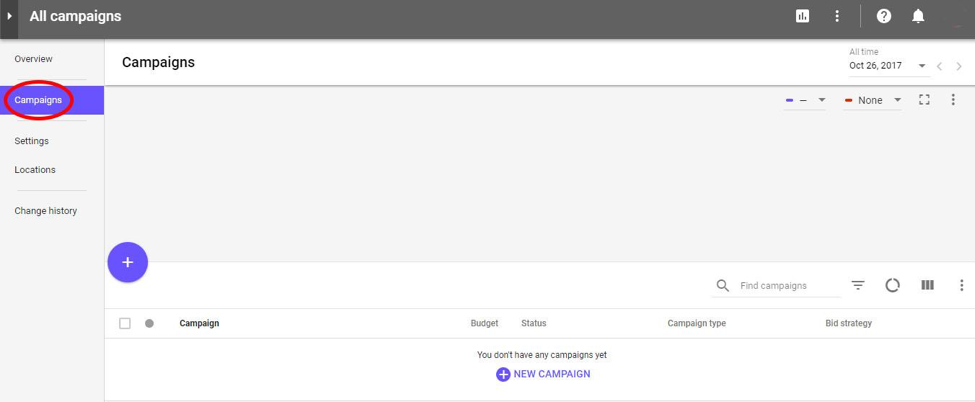
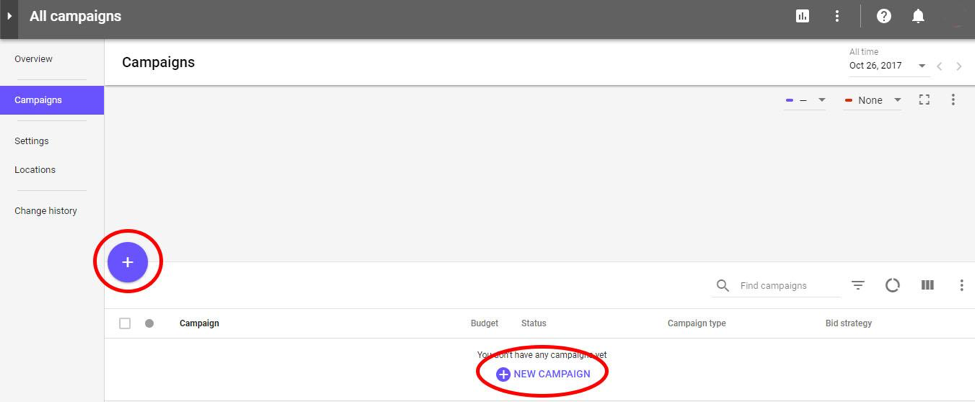
If you’re completely new to Google Adwords, you can contact one of Google’s support team and they’ll walk you through the set up, free. Or, you can continue reading this article to see a step-by-step tutorial to getting started and running your first PPC campaign.
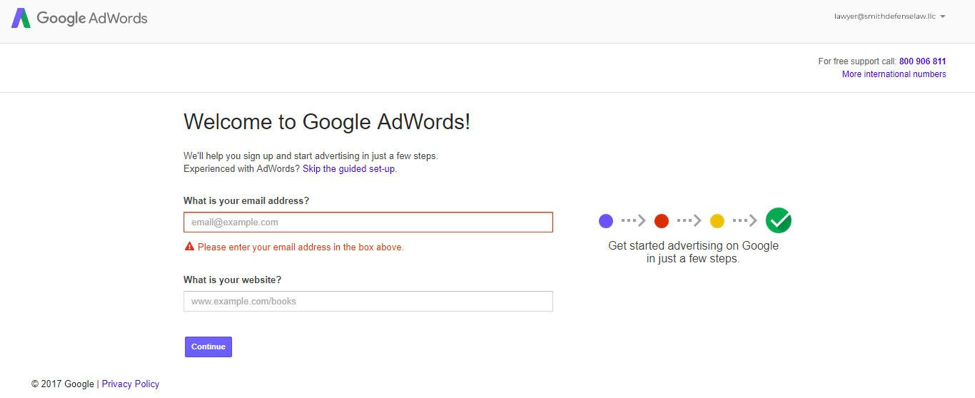
After clicking START NOW you’ll be taken to a signup page. Enter your email address and lawyer website then click next.
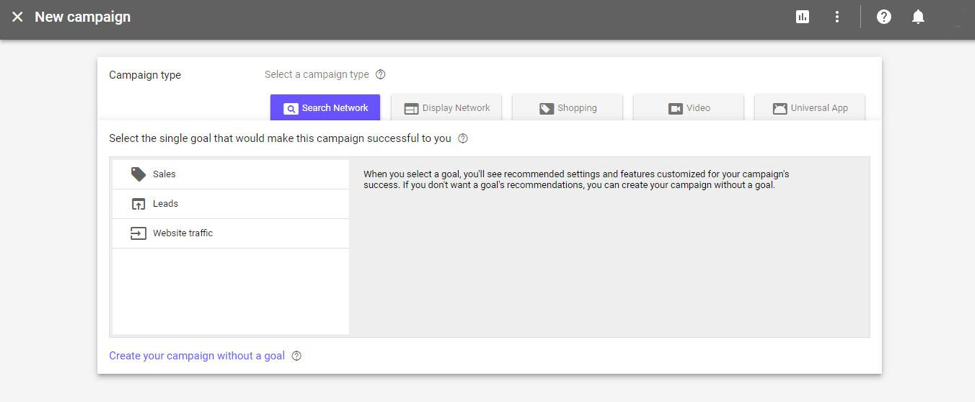
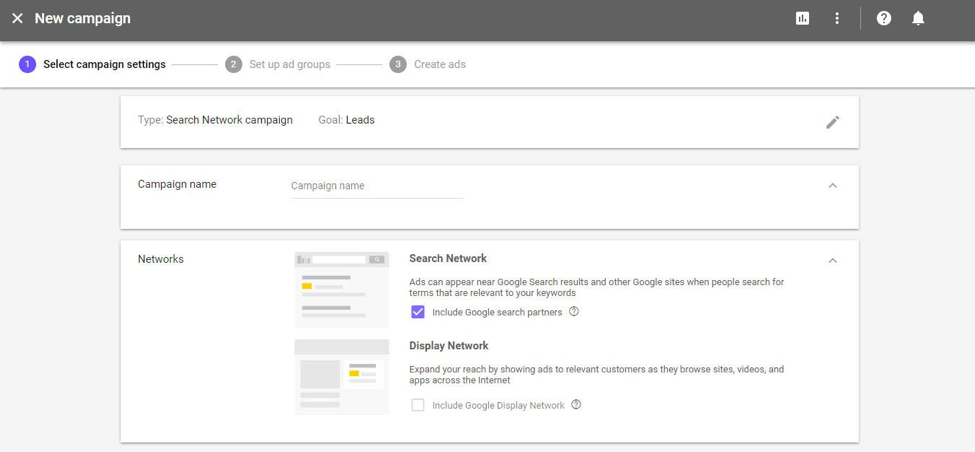
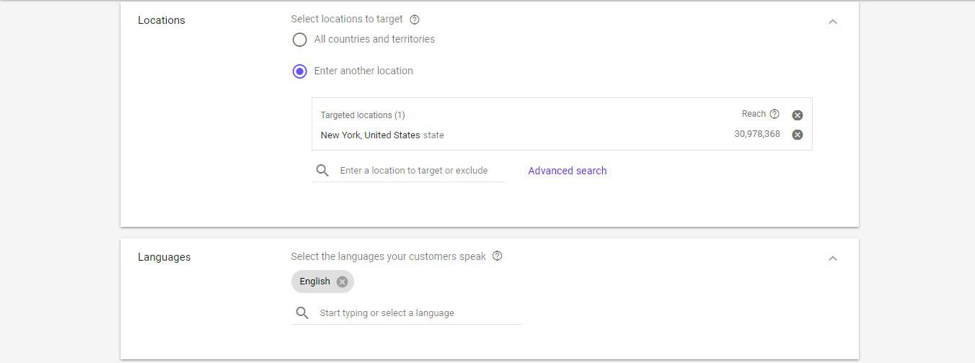
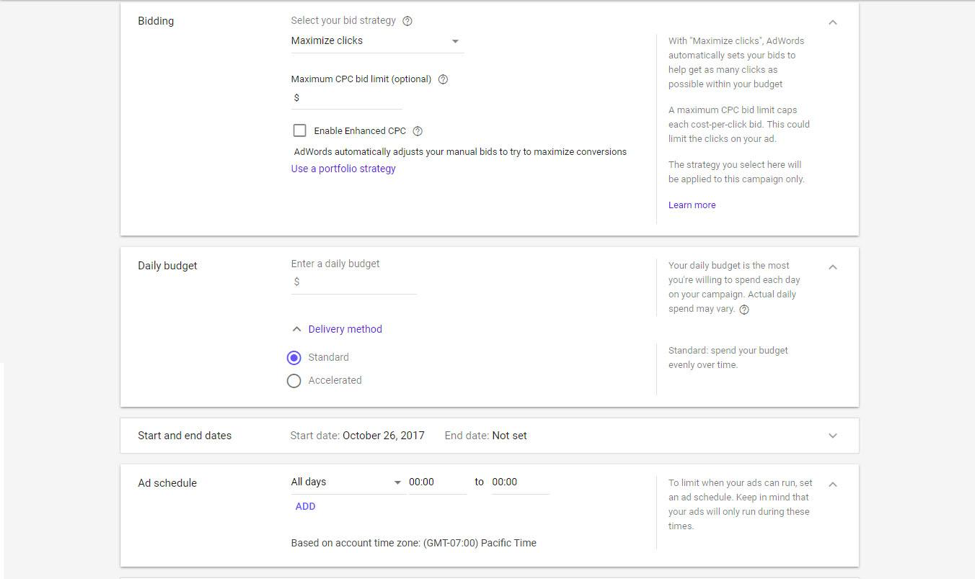
Two important sections are the location and bidding.
Setting the location will determine who narrow or wide you want your ads to reach.
As well, bidding determines how much of your budget will be used toward keywords being searched. More information on bidding is provided later in this article.
Bidding for Lawyers
There are different bidding strategies to consider when it comes to targeting prospective clients using Adwords.
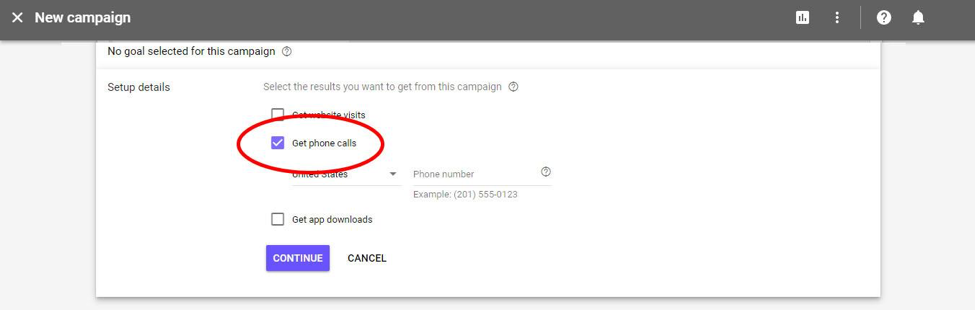
If you’re looking to get the most phone calls to your law firm, choose Maximize Conversions (be sure to set the goal on the previous page to “Get Phone Calls”
You should use the Enhanced CPC if you want Google to automatically increase your bidding when it will improve conversions or decrease your bids if it is less likely to convert.
NOTICE: The search terms Lawyer and Attorney are the most expensive search words for Lawyers. Bids can range up to $100 for a single click.
As you gain more experience with Google Adwords, you can experiment with the different options to see which settings give you the best ROI.
When you are finished selecting your campaign, click SAVE AND CONTINUE.
SET UP AD GROUPS
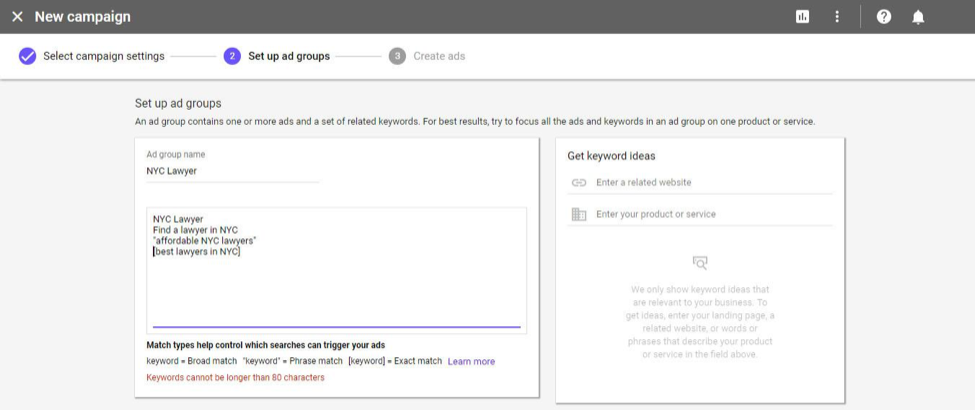
When you are setting up an Ad Group, focus on one purpose. In this example, we choose NYC Lawyer as the Ad Group with a range or related keywords:
If you put keywords without “ ” (i.e. NYC Lawyer) your ads will be displayed to less specific searches (e.g. Is Bernie Sanders a NYC Lawyer?).
If you put “ “ around a keyword (i.e. “NYC Lawyer”) your ads will be featured to those using that keyword in their search (e.g. Most affordable NYC Lawyer).
If you use [ ] around a keyword (i.e. [Affordable NYC Lawyer]) your ads will be displayed only to those who search the exact same keyword, (i.e. Affordable NYC lawyers).
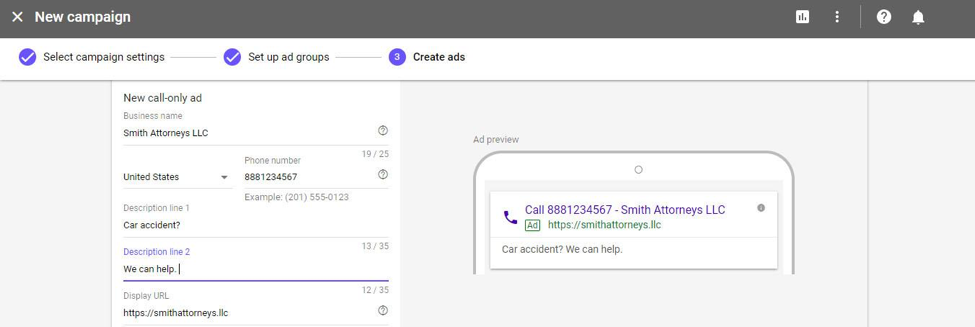
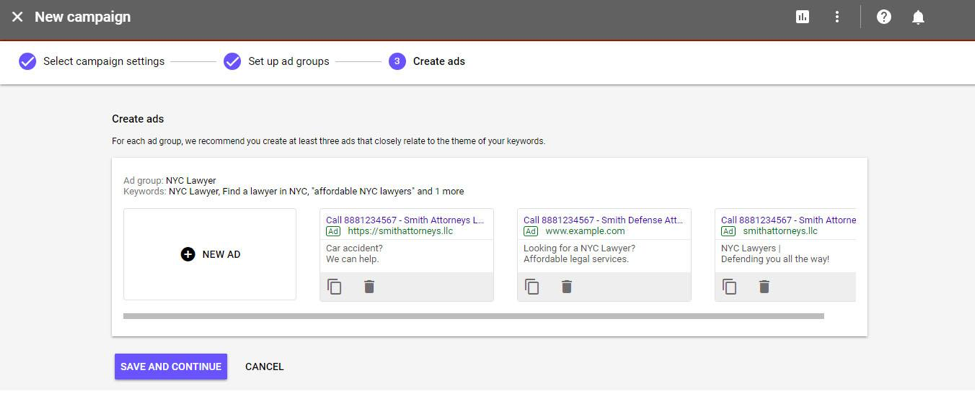
Here you can test a range of different copy. If you clicked the “Enhanced CPC” Google will soon use the ad getting the most clicks and conversions.
When you’re satisfied with your ads, click SAVE & CONTINUE to review everything.
Landing Pages for Your Google Adwords
The “Verification URL” is used to send people who click your ad to a contact page or location on your website with your phone number and any additional contact information.
If you don’t have the ability or budget to change your website to send traffic onto a specific webpage, you don’t have to.
There are landing page softwares provided by companies like LeadsPages and ClickFunnels which allow you to easily design a place for visitors to go after clicking your ads.
[thrive_leads id=’702′]
Getting started with Google Adwords can be a little overwhelming. If you keep reading, you can learn about Google Adwords Express which makes the setting up advertisements easy and worry free.
Google Adwords Express
Google Adwords Express (AWE) is a simplified version of Google Adwords that automatically manages your online ads. All you have to is set up a campaign and your ads will be featured for a month.
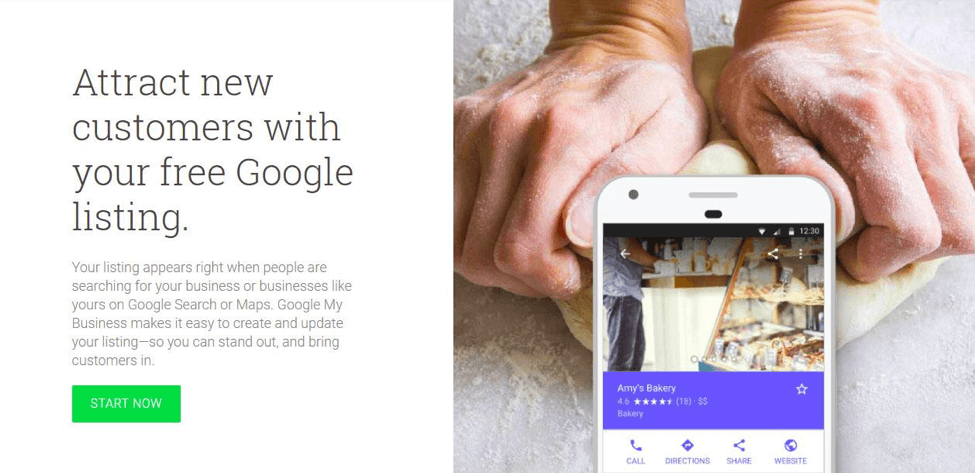
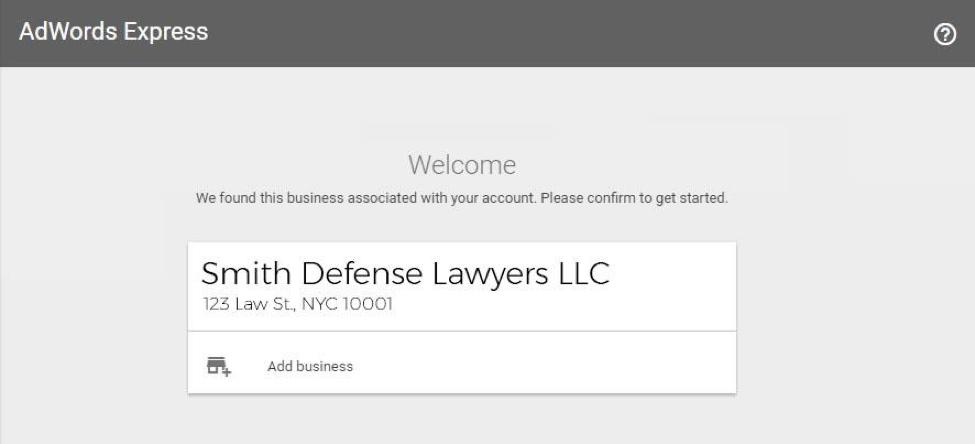
With GMB, you can create a free marketable tool for your law firm. Start by submitting your law firm’s location and other business information. Once your account if verified (you’ll receive a verification code in the mail) you can help potential clients find your business and learn more about your services.
Now that you have a GMB listing, you can create a new AWE campaign.
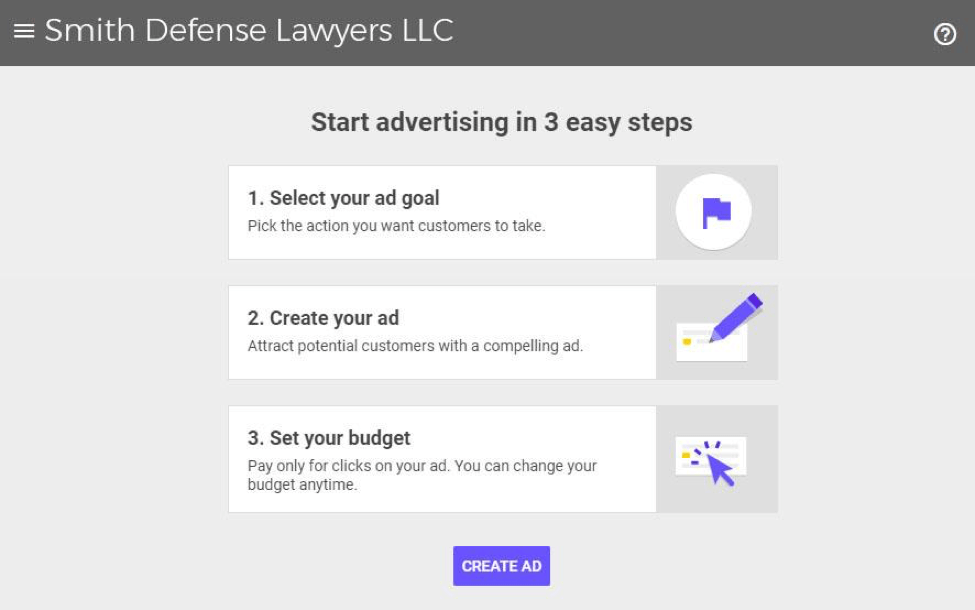
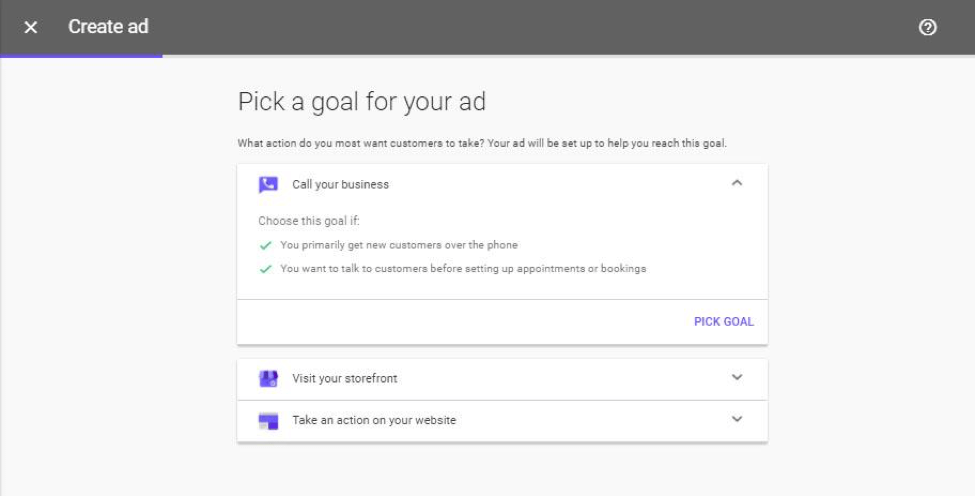
After selecting your GMB listing, there are 3 easy steps to get your ads up and running:
Start by picking a goal.
Do you want prospective customers to call your law firm?
Visit your law firm?
Take a specific action on your website?
After choosing one, you’ll be requested to “Pick Goal”
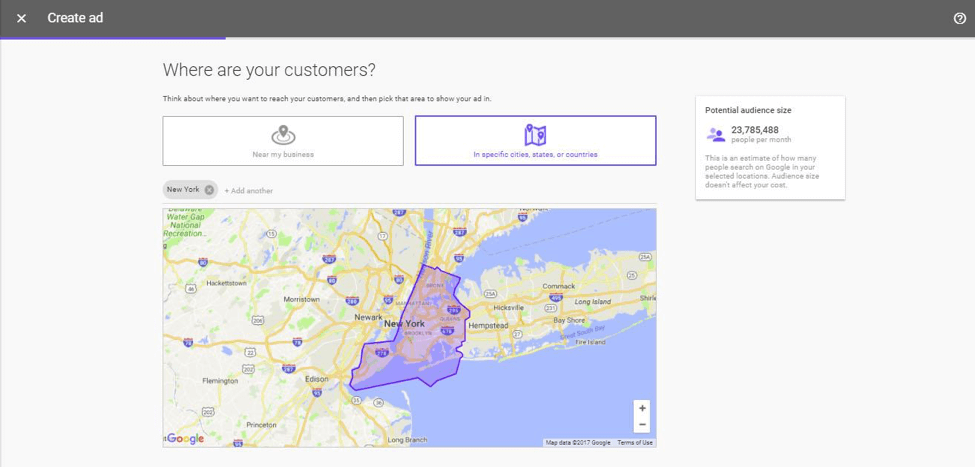
The next step allows you to choose your location and the range around it to target your ads. If you’re law firm operates in various locations, you can select “In specific cities, states or countries.”
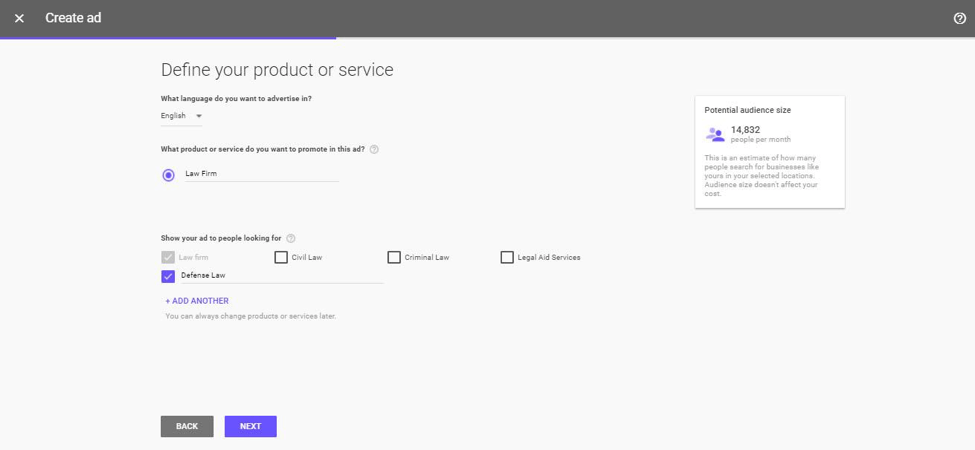
After you have chosen your location and range, you can define your service using keywords prospective clients may be searching for.
Example. Law firm, Defense lawyer; etc.
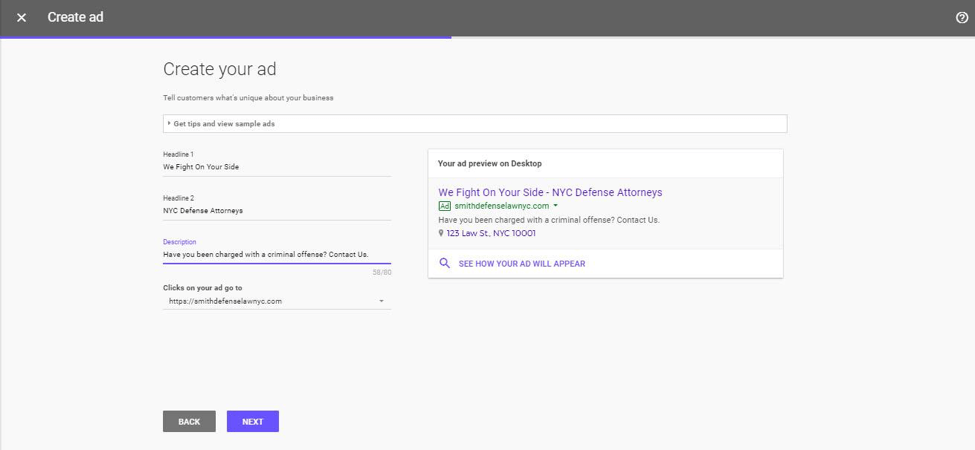
The next step requires you to write the ad.
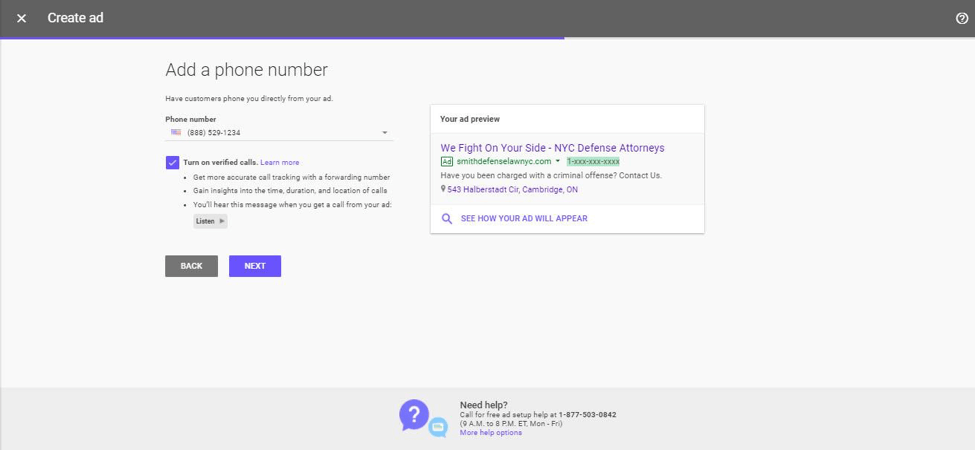
Once you have crafted your ad, you’ll have to confirm your phone number:
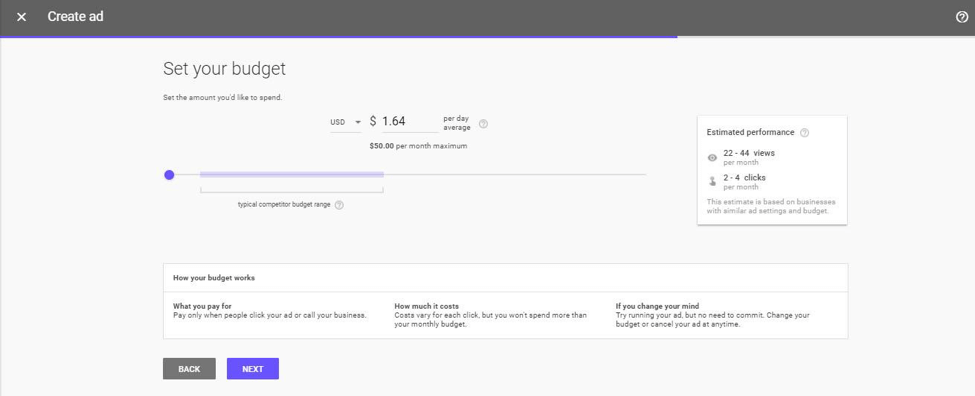
The last step requires you to determine your budget. You determine your daily budget which will be calculated into a per month maximum.
You will only pay when your ad has been clicked on and when your budget is spent your ads won’t display until the next day.
You can set up a budget as low as $1.64 USD per day up to $76.32 USD per day.
Clicking next will take you to a review page where you can check the detail of your ad before it goes live.
If you haven’t set up a payment method, you’ll have to submit your credit card information to finalize your ad.
GOOGLE ADWORDS VS. GOOGLE ADWORDS EXPRESS
If you’re unsure about the differences between Google Adwords and Google Adwords Express, here’s side-by-side comparison:
Google Adwords
Google Adwords Express
BENEFITS
Pay only when your ads are clicked
Pay only when your ads are clicked
SETUP
Advanced features requiring: keyword selection, bid pricing, and account structuring
Minimal management: simply setup your ads and let them run
EASE-OF-USE
Can be difficult for new users
Easy to use
REQUIREMENTS
Adwords account + Credit card
Adwords express account + Google My Listing + Credit card
KEYWORDS
You choose all your keywords + phrases
You choose some of your keywords + phrases; Google will come up with more related to your ad
Reach potential clients in any geographic location
Reach potential clients in any geographic location
MIN. BUDGET
$0.01 per Day
$1.63 USD per Day
MAX BUDGET
N/A
$76.32 USD per Day
SUMMER OF GOOGLE ADS
Google Ads has incredible potential to drive prospective clients to your law firm’s website. If you’re looking for something quick and simple to gets ads running online, try Google Ads Express.
Whether your goal is to drive readership to your blog, a following to your social accounts, or phone calls to your office Google Ads is a budget friendly solution for your business.
As an alternative, Facebook Ads allows you to tap into social media to drive more referrals and clients to your law firm. Read Facebook Ads for Lawyers.
If you’re fresh out of law school, you might consider starting your own law firm. In order to succeed in legal profession, having the ability to find new clients will become the foundation of your success.
One of the first things new lawyers that you can do to spread the word of your career is by simply talking about it. Whenever you meet new people, let them know you’re a lawyer.
What you shouldn’t be doing is giving away free advice but instead discuss what it is your law firm can do and how they can get in touch with you.
If you want a few more ideas on how an attorney can get clients, here’s a list of ideas to help you refer clients and grow your firm.
Friends and Family
Your friends referring clients and family will be one of the best referrals to help you find new clients as an attorney.
Since they know you best, you’ll become the first person they’ll mention if one of their friends or someone they know needs a lawyer.
If you’re opening a new firm, be sure to send an announcement via letter or e-mail to let everyone know.
Join the Bar Association in Your Community
If you have absolutely no connections, the first thing you should do is join any bar associations of committees in your community. Making connections and building relationships with other attorneys will give others a chance to get to know you and what you do.
Eventually, this can lead to mutual exchanges of clients back and forth. If one of your new lawyer connections has a client they can’t help (i.e. your connection is a divorce lawyer looking for legal advice for a car accident) they may refer that client to you.
In exchange, when you get clients at your own law firm, seeking services you don’t provide, you can refer them to someone in your list of connections.
Develop Your Online Presence
Social media and online browsers are great places to start finding clients as an attorney.
Get started with a website. Having a website allows you to showcase your previous cases, give information about your law firm, and most importantly, let’s visitors know how you can help.
Once thing to consider when setting up a website to find new clients is your domain name. The domain name you choose for your law firm’s online identity should stand out and briefly highlight your area of expertise. Make sure you choose the right domain name for your brand new law firm, before going live.
With your newly made law firm website, you can begin to share your knowledge on a blog. Blogging allows you to share content about your law firm in a way that connects with prospective clients dealing with legal problems.
Articles like, “What to do if you want a divorce” or “Steps to take after a car accident” provide information people may be searching. Of course, within articles like those will include “contact a lawyer to start a consultation.” If you’re content marketing is done well, you can use blogs to attract visitors to your website, get them to contact your firm, and potentially increase the number of clients you get.
Social Media
With a blog for your law firm’s website you can begin sharing content on places like Facebook, Twitter, Instagram, LinkedIn. Sharing on these platforms allow you to make direct connections with those who may need your legal services.
As your social media channels grow in size, you can occasionally share promotional posts such as “Get a free consultation” or “You pay if we win!”
Posting frequently on social media is how you’ll stand out online. While this may seem like an added amount of work, your posts have the ability to get new clients organically. An alternative to this would be advertising.
Creating a pay-per-click (PPC) campaign with Google will put your law firm’s website at the top of the search engines. Instead of worrying whether your website is ranking high in the search engines organically, you can use a PPC campaign to put you at the top.
Google AdWords uses keywords to match your ads with someone searching for it. For example, if someone was searching for, “attorneys in New York,” having an ad using that phrase will increase the likelihood of it being clicked. However, depending on where you live and what area of practice you are in, Google AdWords can be very expensive.
Facebook Ads is another way for an attorney to get new clients. You can modify your ads to target specific groups of people and create a distinct purpose. Facebook ads can be used to grow your social media page or directed toward a contact page or get in touch with your firm.
You can also create ads for LinkedIn and Instagram depending on your practice area and how detailed you know your prospective client types.
When using online advertising to push clients to your website, be sure to send traffic to pages that convert. You could end up paying a lot of money if you’re web pages are not created to turn a curious visitor into your next client.
Attorney Lead Generation Services
If you’re not good with technology, social media, or websites, you can use an attorney lead generation service to find new clients.
Total Attorneys and AttorneyBoost are services which allows you access to a pool of people looking for a lawyer. Total Attorney handles your own marketing efforts and sends traffic to your website.
Online attorney solutions vary in quality of clients and conversions on your website. Use these with caution.
As an attorney, getting clients is the key to a successful legal practice. How you find clients will require a combination of the above ideas in addition to the methods you discover and learn.
How to Get New Clients as a Lawyer
In the legal sector, digital marketing can attract up to 50% of potential clientele.
How Lawyers Get New Clients With Networking
Networking has never been a buzzword anymore and the key is to be a part of every sector. In law practice, lawyers must create networks for the client. Networking is essentially more than meeting attorneys at conferences or meetings. While networking has an important role to play, extensive networking is essential for attorneys in order to connect to individuals and entities outside a legal network. Imagine a motorcycle accident lawyer.
Lack of Positive Reviews
Our society is fueled by online reviews in a way where the average person will value the online review more than a friend will. When one searches online for an attorney, the choice usually depends on what stars are next to the firm. A lawyer who received poor ratings should read the reviews of those reviews carefully, as 90% of consumers’ decision is made based on what they read. Having positive feedback from previous clients can give them confidence that you have a great reputation and increases the chances that you will be asked for an interview. Then again, online reviews must be considered a bit like the credit ratings.
How Can Lawyers Get More Clients With SEO
The next steps in becoming a successful lawyer involve using the power of search optimization. Search engine optimization for law firm attorneys is a technique that makes your website recognizable for search engines. the Google search it’s algorithm for rankings differ according to various factors. Websites that get high rankings may appear on page 1 of the search engines. This organic results are shown above the paid advertisements, more about those advertisements to be announced soon. If one wants to be viewed in a clientele area the importance is in creating a landing page on the SERP.
Build a High-Performance Website to Attract More Legal Leads
If potential clients see you through an appealing website they will be happy with your firm’s ability. Using these steps, you can convert prospects into customers. A good lawyer’s website is essential and must have no overstatement. Having no good website can result in poor performance in marketing and advertising campaigns. Your paid marketing strategy generates a terrible return on investment. If you thought you didn’t have the skills to write an effective website to attract and retain new legal clients, then it’s not necessary.
Build an Online Presence
Referrals provide many clientele. However, it is decreasing from 21% in 1 year to 43%. It doesn’t surprise anyone as 96% seek legal counsel online for their questions. As a lawyer looking for clients you should not neglect the potential for digital marketing. The internet has become a more effective platform to advertise & have clients find other clients. How can I make more leads through my website? SEO isn’t a simple process.
Referrals From Other Lawyers
85% of business is generated through referrals. Developing strong relationships with your former clients and colleagues is the key for the business development side of an effective legal practice. Of course, sometimes it is necessary to go an additional mile for the best possible customer satisfaction. Law firms with higher referrals usually have quid pro quoi. Tell your customers you appreciate this gesture when a client does!
Create Free Lead Generation Opt-ins
To gain legal clientele, an attorney should gain the confidence of their target audience. This can easily happen utilizing free lead generation opt-ins. In general, lead generation opt-ins are very valuable content and can be easily accessed through e-mail. What are the similarities? Maybe you have already tried doing it to look at an item. For a new attorney, you can download e-books and other useful documents for legal matters (e.g. filing a divorce). Tell me the reason why people signup as clients?
Legal Directories Are a Good Source for New Law Firm Clients
Lawyer’s lists will help you improve brand visibility in many ways. Specifically, we suggest that you use legal directories to ensure search results are valid for multiple directories. Listed in legal directory websites can improve online visibility. Among the most popular legal websites you can find a list of all the top legal professionals and firms you work with in one site: You’re better off using multiple directories to increase visibility.
Local SEO Is Key to Getting More Lawyer Clients
Local SEO is an online optimization method that targets clients located near the location of law firms. This is the most efficient way to have clients find lawyers for a client. If your website has local clients, it must be optimized with keywords that match specific locations. You just need to tweak your keyword list and include words like the name of the city you live in. So let me say your lawyer provides bankruptcy services in Atlanta, Georgia. You can use the keyword Bankruptcy law practice in Atlanta.
How Lawyers Get Clients With Organic Search
Most people know about SEO. You might even be able to see how this is done by weaving keywords into the site content. Moreover, many people can type his query on Yahoo, and then contact an attorney for advice on the matter. But these are merely a few SEO tactics worth pursuing. Optimizing your website for search makes it a better search site. And a drop in rankings is astronomically huge. What does Google think happens when it shows up first in search? How many times do people click a site to get more visitors?
How to Get More Clients for My Law Firm Using SEO (Tutorial)
To improve search visibility, there are online and offline optimization strategies that need to be considered. For a personal injury lawyer alone, it can be tricky to determine keywords when searching a website for a particular keyword. We say this to our potential clients. Tell me your desire? How can one illustrate this problem? It’s great, and you aren’t here yet. Tell me the answer to this question? Your prospective clients will probably look into “what happens in personal injury cases” more frequently.
Run Advertising Campaigns
Often the most recent lawyers have a preference towards paid advertising. Advertising is available in all forms: print, radio, television or online. Because our firm specializes in Digital Advertising for Law Firms, our focus is Internet Advertising. It is also advantageous for your potential client-ele to find leads quickly within your target location. Tell me the way things are working. I mean, a man searches online for criminal lawyers in New York. Depending on the content of your site your ads should appear above the main page. The chances are increased that a customer clicked on a link or booked a meeting on this site. Does that sound very nice? Basically, advertising is an incredibly effective way to attract customers.
Be Helpful to Get More Clients
Several prominent law firms need SEO to be successful in Google. Your company is unique. Use Google Ads and digital advertising to improve your search ranking and increase visibility on search engines. Can someone get more legal clients? Answering client questions. The more beneficial the content, the longer they remain on your search engine marketing website.
Lawyer Directories
Legal directories are an excellent resource to grow your visibility. They help lead finding more paying clients by having an important place where they can be seen. Check all the legal directories available and confirm your application is approved. You can increase the chances people call you when someone wants help. Several legal directory websites specialize in just one field. Therefore, knowing what makes your presence different is important for a great result and for you.
Slow Response From Legal Team
Tell me the average amount of time a prospective customer takes in response to a website request? It’ll be hard to turn prospects into business. This is possible via chat bots or automated software. The technology can respond automatically to requests for specific data from clients. Automated response meets client’s desire for instant gratification.
Reputation Management Is Key
Let’s just say that some reviews will be good, some are bad. Finally, you must address the negative review. Your answers will show you the integrity your prospects are looking for. Upon the failure of a project, it will go back. Negative reviews can be useful lessons if you are concerned about something you could improve. All negative comments will mean that you either give help or contact me directly. Besides reputation management, some of these directories have been mentioned previously.
Make a Great First impression
Having a good first impression is vital for convincing someone to trust you on personal issues. With an ever-changing legal landscape, every law firm should differentiate themselves as an important choice for clients. Insight from clients automate their intake process to improve customer satisfaction. The rapid response of our clients leaves lasting impressions in every step of their journey.
Smooth Client Experience
Without the need for an ongoing client intake, the leads (potential customers) often get lost. Consumers enjoy smooth and low-effort experiences. The more attention you give the child the more happiness they’ll have. Client intake software allows for quick access and quick collection of leads’ data using an online client intake form that automatically creates a record of them in your database.
Email Marketing Can Get Lawyer Clients
Email marketing offers many benefits. Email marketing is a very efficient way of managing it all. For instance, if a user visits the blog a few days before the event and provides their information, you can include it in the list you have on this website. Afterwards, it is possible that you send regular mail weekly. The emails are intended to remind clients that your firm exists.
Not to worry. In today’s post, we’re going to delve right into what an email list is, why you need to build one, and how to get people to subscribe to your list.
An email list should always consist of those who’ve willingly volunteered their email address. It’s never a good idea to purchase or rent email addresses, for more than one reason.
These days, having a website isn’t enough. An estimated 500 websites are created every minute. That means that a site visitor can easily leave your website, never to return again. That’s not because they don’t want to return– maybe they’ve simply forgotten how to find you.
That’s why an email list is crucial. When a visitor loves the information on your site and signs up to receive regular emails from you, you don’t have to worry about them getting lost ever again.
Here are a few other reasons you need an email list:
It helps you stay top of mind. Your email subscribers may not need your services yet, but if you keep in contact with them on a regular basis, they’ll know where to turn when the time arises.
It provides valuable information to your email subscribers. You can educate your email subscribers and keep them in the know about things going on in your practice.
You own your email list. You may have a lot of fans and followers on social media, but at any moment, a social platform could deactivate your account and poof! goes all of your hard work. With an email list, you’ll always have access to your subscribers.
Email is better than social media. A post on a social media timeline or profile only lasts for a few moments before new posts take their place. With email, you have a permanent spot in a subscriber’s inbox until they manually delete you.
Need a step by step checklist for growing your email list? Subscribe to resource our free checklist.
How do I get people to subscribe to my email list?
To get people to subscribe to your email list, you need to present it as an option. People won’t subscribe if they don’t know about your email list. They won’t go searching for it, either.
Here’s how to get people to join your email list:
Ask them. It may seem obvious to you, but it’s not obvious to visitors. They may not notice your email list unless you tell them it’s there. Ask in your blog posts, on your website (have a permanent spot for email signups– we’ll help you with this), and on your social media pages.
Give them a reason. Sometimes, asking isn’t enough. You may also need to encourage them with a lead magnet. This lead magnet will draw subscribers in and give them an instant reward for signing up to your email list.
[Tweet “Sometimes, asking isn’t enough. You may also need to encourage them with a lead magnet. “]
Wait, what’s a lead magnet?
You’ve seen lead magnets before, but probably didn’t know them by name. A lead magnet is an incentive offered to site visitors in exchange for their email addresses.
A lead magnet should be valuable and relevant for site visitors. It’s not about stroking your ego (i.e. ‘check out why we’re so great’). It should be about helping, informing, or entertaining your audience.
We have our very own lead magnet right here on our site. By entering your first name and email address here, you’ll receive a weekly marketing plan delivered straight to your inbox.
It’s not smarmy. We’re not trying to trick you into joining our email list with smoke and mirrors. You know that by giving us your email address, we’re going to email you.
It’s valuable. It gives something in exchange for joining. We tell you how you’ll benefit from joining our email list (you’ll receive a free actionable plan every week).
It doesn’t ask for too much. Anytime you’re asking your site visitors for more than a name and email address, you’re scaring them away. Keep a simple form for your email signup.
How to create an amazing lead magnet
Now that we’ve gone over what a lead magnet is, it’s time to figure out how to make one that your site visitors will actually want.
First, settle on an idea for your lead magnet. As you can imagine, your lead magnet will vary depending on your area of practice and the needs of your client.
Here’s a few examples for different practice areas:
Bankruptcy – An ebook, Which Chapter of Bankruptcy is Right for Me?
Business – A guide, LLC, Corporation, Sole Proprietorship, Oh My! Which One Should You Choose?
Criminal – A guide, Is Marijuana Still Illegal? A List of States and Their Laws Concerning Marijuana
Entertainment – A video series, How Do I Know If I Need An Entertainment Lawyer?
Family – A guide, A Guide to Calculating Child Support in Your State
Immigration – An ebook, Understanding the Rules of a K-1 Visa
Intellectual Property – A guide, A Step by Step Guide to Copyrighting and Protecting Your Ideas
Labor – A printable, A Printable List of State Labor Laws
Medical – A guide, Medical Malpractice: Should You Settle or Go to Court?
Personal Injury – A checklist, What Should You Do Immediately After Getting Injured on the Job?
Second, create your lead magnet. Don’t worry– it doesn’t have to be fancy. It can be simply created and formatted with a program like Microsoft Word or Pages for Mac. If you don’t have either of those, you can create a lead magnet with the free web-based option Google Docs.
Start by creating an outline of what you’d like to talk about within your lead magnet. Don’t hold back. The more content you can add, the better. Next, type it all out and don’t edit yourself until you’re done. After you’ve written a rough draft, you can come back and edit for clarity and cohesion. Finally, add graphics to your lead magnet to spice it up and inject visual interest. Here’s a list of free stock libraries that you can check out.
Third and finally, set up an account with MailChimp, if you haven’t already. MailChimp is an email marketing service that allows you to send out your lead magnets to new subscribers automatically. Even better– AmazeLaw seamlessly integrates with MailChimp. Set up is easy, but if you have any questions, let us know.
Final Thoughts
Voilà! You’re done. A lead magnet will draw your clients in and grow your email list. You’ll wonder why you didn’t do this sooner.
Need a step-by-step checklist for growing your email list? Subscribe to resource our free checklist.
Thinking of starting a blog on your law firm’s website? That’s great. Not sure where to start? You’ve come to the right place. In this post, we’re going to share eight easy steps to creating a useful and popular blog. Let’s go!
Would you like a list of blog topics to get you started? Subscribe to receive this free resource.
Depositions, adjudications, affidavits, oh my! Unless fellow lawyers are your intended audience, tone down the law speak. Your clients will quickly feel overwhelmed by legal terms that they don’t understand.
Here’s the caveat: you should use it as a relevant keyword initially– somewhere in the first couple of paragraphs in your blog post. Then, define the keyword and break it down so that your audience understands what it means.
Here’s an example:
A prospective client arrives on your blog after searching for the term “expungement dallas, tx.” This person has a fuzzy idea of what expungement means. They only happened upon the term when asking around about removing a youthful indiscretion from their permanent criminal record. Your site needs to educate them on the bare basics of expungement and then provide relevant insight you’d like to include, based on what a prospective client will understand.
[Tweet “Always keep your intended audience in mind. “]
Always keep your intended audience in mind. Adjust your conversation accordingly.
You may be multi-passionate, but you might excel at one specific area of law. This is where you probably focus your practice and where you should also focus your blog.
Instead of trying to be all things to all people, zoom in on the one topic (or handful of topics) that your audience wants to know more about.
How do you determine the best topics to tackle in your law blog?
Consider what your clients or colleagues (depending on your audience) ask you about the most. There has to be recurring questions that you get asked frequently: that’s the place to start. As you fill up your blog with content, people will ask you more questions. Of course, that can also inspire new posts.
The bottom line: start by the answering the questions people ask you most, no matter how basic.
No one wants to look at a wall of text, no matter how engaging. You’ve got to break it up with imagery to keep your audience’s attention. Imagery also helps illustrate ideas and convey your tone– whether it’s funny, pensive, or artsy.
I have a secret source of free images– actually, it’s not secret at all, and of course it’s legal. There are hundreds of amazing stock libraries available with 100% free images to spruce up your site.
All you have to do is visit one of the sites below, save the image you like, and then upload it into the body of your post when you’re ready to add it.
Of course, I’d be remiss if I didn’t add this note: check copyright usage. Most of the images in these stock libraries are under the Creative Commons license, which allows you to use the images for free. Some photographers or websites require a link back (attribution). The usage requirements are always listed, but are subject to change.
And if you’re looking for something a little more local, a little more personal, check out Flickr as well. It’s a little murkier when it comes to licensing, but here’s a guide to finding free blog post images for your firm.
Images aren’t the only way to add visual interest to your blog. There’s yet another way to increase the readability of your blog: white space. Instead of lengthy, five-to-seven-sentence paragraphs, chop it up into bite-sized nuggets.
Now, I know this goes against everything you learned in grammar class, but remember this: you’re not writing a dissertation, you’re writing a blog post. Unlike your college professor, website visitors don’t have any incentive to read your entire blog post. If it looks long and tedious, it’s going to get passed up.
[thrive_leads id=’702′]
Take a look at how I’ve structured this blog, for an example. You may notice that there are no large clumps of text. Most paragraphs are three or four sentences long, but I may throw in a one sentence “paragraph” for emphasis and variety.
Like so.
Breaking up your text in this way makes it easier for visitors to read your content.
There’s nothing worse than coming to a blog, loving it, and then realizing it hasn’t been updated since 2009. Helloooo… Where did you go? It’s lonely in here.
You don’t want your visitors to feel that way.
Your visitors rely on you to keep your blog current and relevant to their needs. Once you start a blog, commit to regular posting, even if you don’t have many (or any) visitors at first. If you post regularly and follow the other steps in this guide, they will come.
Plus, a regular posting schedule will entice visitors to subscribe to your blog, and return often.
Before people actually read your post, they’re going to read your title. Does it draw them in?
Your title doesn’t need to be packed with keywords to grab attention. Funny phrases, interesting questions, and controversial statements can all engage the reader. Here are a few considerations for a great title:
Create a list post (i.e. 10 Reasons Why, 7 Things to Consider…)
Create a how-to post (i.e. How to Hire a…, How to Find…)
Add a benefit to your post (i.e. Here’s What You Need to Know About X…)
Keep it simple but catchy. The reader should be know what the topic is about before clicking.
Keep it short. Nothing longer than 60 characters, or under 10 words.
People come onto your law blog for very specific reasons. Let’s say you have a family law practice. Some visitors may want to learn about adoption, and others about child support. You specialize in both.
To accommodate visitors, create categories that make it easy for them to isolate posts of one topic. They should be able to find more of what they’re looking for by clicking on the category section and selecting a topic.
When you’re creating your blog posts, make sure that you’ve created and then selected specific categories.
Consider creating at least three categories for your blog. If you’re stuck, I’d start out with: advice, opinions, and news.
As a lawyer, it’s your job to stay up-to-date on the most relevant news stories. If you work as an immigration attorney, you’ll probably have an opinion on the current political discourse about refugees.
Bring it on. That’s what a blog is for– it’s a place to add your commentary and unique perspective to the conversation.
Don’t be afraid to insert your take on hot topics.
Would you like a list of blog topics to get you started? Subscribe to receive this free resource.
Maybe you’ve heard of email lists but you don’t know where to start. Maybe you don’t know what the heck I’m talking about it, but it sounds like something you should know.
Wherever you are on the spectrum, this post will help. We’ll discuss everything you need to get started on building an email list for your law firm along with why you should build an email list to begin with.
Would you like a five step quick start guide to building your email list? Subscribe to receive this extra guide.
An email list is the most valuable marketing resource you have. Your email list represents people who want to have a relationship with your law firm – subscribers. These subscribers want to know what you have to say about hot topics and enjoy reading your advice.
Let’s take a look at the main benefits of creating an email list:
Top of mind awareness
An email list keeps your law firm at the top of subscribers’ minds. They may not need your legal services now or even six months from now. However, when the need arises, you’ll be the first (or only) law firm your subscriber will think of.
You own the list
You may be thinking, Isn’t my social media platform good enough? I already have a ton of fans and followers on social media.
Although a social media presence is important, it’s inferior to creating an email list. The main reason is that you don’t own that list of fans and followers. If Facebook or Twitter decides to delete your account tomorrow, everyone who follows you will go bye-bye, whether that’s 10 people or 10,000.
When you own an email list, you won’t ever have to worry about losing your subscribers.
Promote your services
Did you know that email is one of the best ways to market your law firm? That’s because your list contains people who actually want to be on it. It’s not just random people who stumbled onto your website via an ad or review site.
The people on your email list are highly interested in the services that you provide. It stands to reason that the people who took their time to sign up for your email newsletters actually want to hear from you.
In your email, discuss what you offer. Highlight key services. Describe these services in plain English.
You may think, why do I need an email list now? My site is brand new and I don’t have a lot of traffic.
[Tweet “If you haven’t already, now is the perfect time to set up an email list.”]
Now is the perfect time to set up an email list. You want to have a method in place to catch any and every visitor who arrives on your site and wants to subscribe.
Think about people who visit your site and then leave. They’ll never return– not because they don’t want to, but because they’ve forgotten. They may love your site and want to receive more content from you, but you don’t have a way to ask for their email address.
So, now that you know why you need an email list, let’s talk about how to create a successful one.
Email Newsletter Best Practices
1. Choose your subject line carefully
The success of your email newsletter rests solely on your subject line. Choose a subject line that makes your subscribers want to click on it.
Get them interested
Why should the subscriber open this email? How will it benefit them? Using a subject like “Granger & Associates Newsletter: June 2016” won’t move the needle, I assure you. However, a subject like, “Everything You’ve Always Wanted to Know About PreNups” is interesting and makes your subscribers think, hmm… what don’t I know about prenups?
It’s all about getting your subscriber to actually open your email.
Keep it short
The ideal length for an email subject line is between 50 to 70 characters. Many email service providers cut off the subject line after 70 characters. This is approximately eight words. Eight words seems short, but there’s a lot you can do in that space when you’re creative.
Avoid certain words
Creativity in word choice is a must, but you’ll want to steer clear of certain overused or spammy words and phrases. These words make your email look like spam to humans, and can also trip an email service’s spam filters. If that happens, your email won’t even make it to the inbox.
Here’s a partial list of words you should avoid in your subject line:
2. Choose your sender email address and name carefully, too
Chose a sender name that reminds the subscriber who you are. You may choose to use the name of your law firm (P&R Law), your own name (Debra Smarts, esq.), or a combination of the two (Debra Smarts from P&R Law). I’m partial to the third option because it provides maximum identification.
We’ve already discussed keeping it short on your subject line. You should also adopt this mentality in the body of your email.
Attention spans are short in inboxes. Your subscribers don’t want to spend 30 minutes reading your newsletter, and they won’t.
Instead of creating a lengthy email newsletter, provide short and easy-to-consume content. Direct them out of the inbox and onto your blog or website to get the full scoop. Email is a quick burst of information, but it shouldn’t attempt to tell the whole story.
4. Include a call to action for each email
Piggybacking off of the above practice, use a strong call to action in your emails to bring people back to your website. At the end of each section of your newsletter, include a button or a link that tells your subscriber what to do next, i.e. “Read the rest on my blog…” or “Sign up for my upcoming class here.”
5. Segment
Have you ever heard of segmenting? Segmenting is the process of taking one email list and grouping subscribers based on demographics or other criteria. For example, you can group everyone who signed up from your blog post about adoption law into one segment and everyone who signed up from your blog post about divorce law onto another segment.
What’s the value of segmenting? In the example above, you can see how a family hoping to learn more about adoption won’t necessarily be interested in advice to divorcees.
By segmenting, you can create specific newsletters for each group. Your subscribers win because they’ll get relevant content they can actually use.
6. Come Up with an Interesting Topic
There are so many great ideas that you can use to create content for your email newsletter. Here are some of my favorites:
Answer frequently asked questions
Highlight success stories (with your client’s permission, of course)
Discuss hot topics/current news
Tease your most recent blog post
Ask for feedback and reviews
Share company news
Highlight a member of your staff
Share the details of upcoming events (webinars, clinics, meet and greets)
Write a newsletter about past events you’ve hosted (charity drives, classes, etc)
Set up an editorial calendar on a spreadsheet and list all the ideas you have for your newsletters. Choose a frequency (once a week, bi-weekly, or once a month). Then, come up with an idea for each newsletter. By working in batches, it’s easier to brainstorm ideas.
7. Remember Your Audience
Who are your subscribers? Speak directly to them. Tone down any legalese because they won’t understand all the fancy lawyer-speak (unless they are lawyers also).
Along these same lines, choose subjects that matter to your subscribers. They may not care to know the finer details of the law. They simply want to know how a law will affect them.
















 The benefit of setting up a Facebook Ad with an offer is that people who see this ad can save it and receive notifications about it.